
Showing all 5 results
-
-
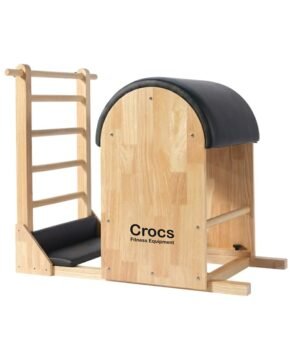
Crocs Fitness Pilates Ladder Barrel P1012
Original price was: ₹94,000.₹47,000Current price is: ₹47,000. -
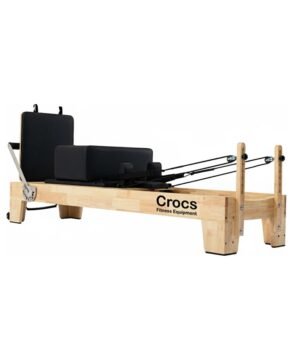
Crocs Fitness Pilates Reformer P1010
Original price was: ₹240,000.₹120,000Current price is: ₹120,000. -
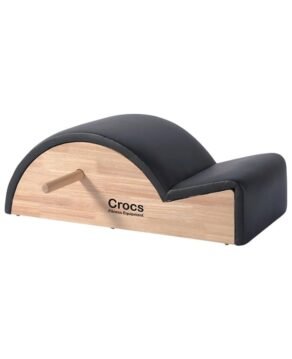
Crocs Fitness Pilates Spine Corrector P1014
Original price was: ₹28,000.₹14,000Current price is: ₹14,000. -
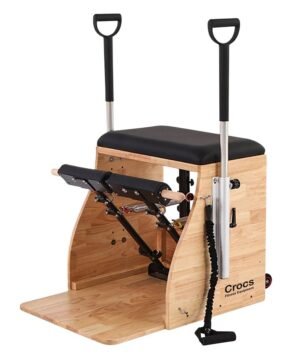
Crocs Fitness Pilates Wunda Chair P1013-1
Original price was: ₹74,000.₹37,000Current price is: ₹37,000.
End of content
End of content
Pilates is a low-impact exercise method designed to strengthen muscles while improving postural alignment and flexibility. Unlike traditional high-intensity workouts that can strain the joints, Pilates focuses on controlled movements and breathwork to create a lean, balanced physique.
Whether you are an athlete looking to enhance performance or a beginner seeking a sustainable fitness routine, Pilates offers a scalable approach to total-body health.
- Superior Core Stability: Often called the "Powerhouse," your core is the foundation of every movement. Pilates targets deep abdominal muscles that traditional crunches miss.
- Improved Posture & Alignment: By strengthening the stabilizers around the spine, Pilates helps reverse the effects of daily "desk slouching" and reduces chronic back pain.
- Increased Flexibility: Functional stretching within the movements creates long, lean muscles and increases your range of motion without the risk of overextension.
- Mind-Body Connection: The focus required for each repetition reduces stress and improves mental clarity, much like a moving meditation.
| Feature | Mat Pilates | Reformer Pilates |
| Focus | Bodyweight resistance and floor work. | Spring-based resistance for added challenge. |
| Best For | Learning fundamentals and home practice. | Targeted muscle toning and rehabilitation. |
| Intensity | Moderate; relies on your own control. | High; adjustable resistance levels. |
Modern research identifies Pilates as a versatile intervention for various demographics, from athletes to clinical populations.
Physical Health
- Core Stability & Pain Management: Pilates is highly effective for reducing pain and disability in patients with chronic low back pain by optimizing the coordination of deep lumbo-pelvic muscles (Ferri-Caruana et al., 2026).
- Improved Posture & Alignment: By strengthening the stabilizers around the spine, Pilates helps reverse the effects of daily "desk slouching" and reduces chronic back pain.
- Aging & Bone Health: For older adults, Pilates improves balance, mobility, and functional independence, potentially serving as a non-pharmacological strategy to manage osteoporosis (García-Bravo et al., 2025).
- Adjustable Resistance: Unlike mat work, which relies on gravity, the Reformer’s springs allow for eccentric muscle contractions—meaning you strengthen the muscle as it lengthens.
- Increased Range of Motion: The pulley system allows the body to move through larger, more functional patterns than floor exercises.
- Better Alignment: The frame of the Reformer provides a physical boundary that helps beginners maintain proper form and prevents "cheating" during difficult movements.
- Versatility: One machine can facilitate hundreds of exercises, from high-intensity cardio (using a Jumpboard) to gentle physical therapy.
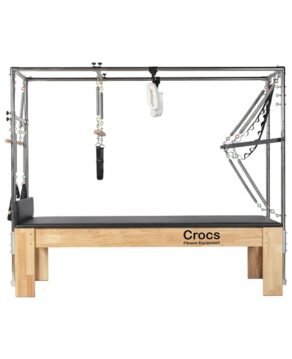
Inspired by the comfort and luxury of the classic Cadillac automobile, this machine was designed by Joseph Pilates to be a "do-it-all" station. It consists of a raised horizontal bed surrounded by a four-post steel frame, equipped with various springs, bars, and a moving trapeze. It offers the unique ability to perform exercises while standing, sitting, kneeling, or even hanging upside down.
The Cadillac Advantage: Why it Stands Alone
- Infinite Customization: With dozens of attachment points for springs and bars (like the Push-Through Bar and Roll-Down Bar), the Cadillac can be adjusted to suit any body type or fitness level.
- Targeted Rehabilitation: Because the bed is elevated, it is the ideal tool for clients with limited mobility or those recovering from surgery who find it difficult to get down to floor level.
- 3D Movement Patterns: The Trapeze system allows for hanging exercises and "aerial" movements that decompress the spine and build incredible upper-body and grip strength.
- Stable Base of Support: Unlike the moving carriage of a Reformer, the Cadillac’s stationary bed provides a stable platform, allowing for precise isolation of specific muscle groups.
The Wunda Chair is a versatile piece of equipment consisting of a padded seat and a spring-loaded pedal. Originally designed by Joseph Pilates for small New York City apartments, it was intended to double as functional furniture. Today, it is used by athletes and fitness enthusiasts to perform over 75 different exercises that target the core, glutes, and upper body.
Why the Wunda Chair is a Must-Have
- Functional Strength: Unlike lying down on a Reformer, many Chair exercises are performed sitting or standing. This mimics real-life movements, making it the perfect tool for functional aging and athletic conditioning.
- Space-Saving Design: For home enthusiasts, the Wunda Chair offers a full-body workout in a fraction of the space required for a Reformer or Cadillac.
- Balance and Proprioception: The small surface area of the seat forces your deep stabilizing muscles to engage instantly, improving your overall coordination and balance.
- Split-Pedal Versatility: Modern chairs often feature a split-pedal system, allowing for reciprocal movements that correct muscle imbalances and target scoliosis or gait issues.
The Spine Corrector is a specialized piece of Pilates equipment featuring an angled arc and a built-in step. Designed specifically to open the chest and stretch the spine, it is the ultimate remedy for the modern "rounded shoulder" posture caused by long hours at desks and devices.
By supporting the spine in an arched position, it allows for deep extension and lateral flexion that is difficult to achieve on a flat mat.
Key Benefits for Body and Mind
- Postural Restoration: Specifically targets the thoracic spine to reverse slouching and improve "forward head" posture.
- Back Pain Relief: Decompresses the vertebrae and stretches tight hip flexors, which are often the hidden culprits behind lower back discomfort.
- Enhanced Lung Capacity: Opening the chest and ribcage allows for deeper diaphragmatic breathing, improving oxygen flow and reducing stress.
- Total Body Sculpting: Beyond stretching, the arc provides a challenging surface for abdominal work, leg series, and oblique toning.
Why the Step Barrel is a Studio Essential
- Accessibility: It provides a supportive surface for beginners who lack the flexibility for certain mat exercises.
- Versatility: It can be used as a standalone piece or placed on a Reformer for added height and challenge.
- Compact & Portable: Its lightweight design makes it easy to move, stack, and store in high-traffic studio environments.
The core philosophy of Pilates—precision, control, and centering—aligns perfectly with physical therapy goals. It bridges the gap between acute injury care and functional movement.
- Low-Impact Strengthening: Exercises are performed in a non-weight-bearing or semi-weight-bearing environment (using the Reformer or Cadillac), protecting joints while building muscle.
- Neuromuscular Re-education: Pilates improves the communication between the brain and the body, helping patients "re-learn" how to move correctly without compensatory patterns.
- Eccentric Loading: Many Pilates movements focus on lengthening the muscle under tension, which is scientifically proven to be effective for tendon recovery and muscle toning.
- Pelvic Floor and Deep Core Integration: It specifically targets the transverse abdominis and pelvic floor, which are essential for stabilizing the spine and preventing recurrent injuries.
Physical therapists utilize specialized equipment to customize programs for:
| Condition | How Pilates Helps |
| Chronic Back Pain | Decompresses the spine and strengthens the "multifidus" muscles that support the vertebrae. |
| Post-Operative Recovery | Safe, controlled movement for hip or knee replacements using adjustable spring resistance. |
| Scoliosis & Kyphosis | Focuses on lateral flexion and spinal extension to improve symmetry and reduce strain. |
| Sports Injuries | Corrects muscle imbalances in athletes to prevent future ACL tears or rotator cuff issues. |
| Prenatal/Postpartum | Safely maintains core integrity and helps in the recovery of Diastasis Recti. |
For a clinical setting, equipment must meet higher safety standards:
- Height-Adjustable Beds: Essential for patients with limited mobility who cannot easily sit or stand.
- Medical-Grade Upholstery: Anti-microbial and easy-to-sanitize vinyl for high-patient turnover.
- Multiple Spring Tension Points: Allows for very light resistance (for delicate rehab) to heavy resistance (for late-stage strengthening).
While often seen as a "stretch" class, elite athletes use Pilates as a secret weapon for injury prevention and explosive power.
Key Benefits for Athletes:
- Dynamic Stability: Enhances the body’s ability to maintain balance during high-speed directional changes (essential for football and tennis).
- Enhanced Muscle Elasticity: Focuses on eccentric strength, reducing the risk of muscle tears and strains.
- Breath Control: Teaches diaphragmatic breathing, which improves oxygen efficiency and lowers the heart rate under pressure.
- The "Core-to-Limb" Connection: Ensures that power is generated from the center, leading to stronger swings, harder kicks, and faster sprints.
If you are targeting B2B clients (Gym owners, entrepreneurs), use this Enterprise-Level content.
The Innovation Pillar: Why Your Gym Needs a Dedicated Pilates Zone
- High Retention: Pilates clients have a higher-than-average retention rate because the results are felt instantly in posture and mood.
- Optimized Floor Space: With machines like the Wunda Chair and Stackable Reformers, you can maximize revenue per square foot.
- Demographic Expansion: Attract a "high-value" demographic, including corporate professionals and seniors, who prefer low-impact, premium environments.
It is complementary. Pilates builds the stabilizing "foundation" that allows you to lift heavier weights safely.
For visible postural changes, 3 sessions per week is the professional recommendation.
Yes. It builds lean muscle mass, which increases your resting metabolic rate. For best results, combine it with a balanced diet.
It strengthens the deep abdominal layers (transverse abdominis), leading to a flatter, more toned stomach.
Depending on intensity, an hour-long session can burn between 200 to 450 calories.
Standard Pilates is strength/stability focused. However, "Jumpboard" or high-intensity Reformer classes do provide cardiovascular benefits.
Yes. By strengthening the core and improving spinal alignment, it is one of the most recommended exercises for chronic lower back pain.
Yes. Resistance-based Pilates (Reformer/Cadillac) is a weight-bearing exercise that helps manage osteoporosis.
Yes, but it is essential to follow a prenatal-specific program and consult your doctor first.
It is a compact piece of equipment that targets functional strength, balance, and upper body stability.
To restore the natural curve of the spine, open the chest, and counteract the effects of "desk slouching."
Look for high-quality steel or wood frames, silent carriage glides, and medical-grade upholstery for durability.
With proper maintenance, high-quality commercial equipment can last 10–15+ years.
For visible results, 2–3 sessions per week are recommended.
"In 10 sessions you'll feel the difference, in 20 sessions you'll see the difference, and in 30 sessions you'll have a whole new body."
Yes. Because it is low-impact, it can be practiced daily, though alternating intensity is advised.
Yes. Consistently doing 20 minutes of focused work is more effective than an inconsistent hour-long session
It depends on your goals. Pilates is superior for posture, core, and flexibility, while traditional gym lifting is better for heavy hypertrophy.
Form-fitting clothing (so the instructor can see your alignment) and grip socks for safety on the machines.
Yes. It was originally created by a man for men (soldiers and boxers) to build functional strength.
Yes. Many professional athletes (golfers, football players) use it to prevent injury and increase power.
Both are beneficial. Morning sessions wake up the spine; evening sessions help decompress from daily stress.
This usually happens when the core isn't fully engaged, causing the neck to take the strain. Focus on "tucking the chin" and using the abdominals.
A light snack is fine, but a heavy meal is not recommended due to the deep abdominal engagement.
Yes, specifically Clinical Pilates, which is tailored for rehabilitation under professional guidance.
It doesn't grow bone, but it improves posture and decompresses the spine, which often makes you appear and feel taller.
Exercises like "The Teaser" or "The Snake" on the Reformer are considered advanced milestones of the method.
Usually, colors signify resistance levels (e.g., Green = Heavy, Red = Medium, Yellow = Light), though this varies by manufacturer.
Wood (Maple/Birch) offers natural shock absorption and a "premium" aesthetic, while Metal (Steel/Aluminum) provides industrial durability and a modern look.
A Tower is a space-saving version of the Cadillac that attaches to the end of a Reformer, allowing for 80% of Cadillac exercises in a smaller footprint.
Ideally, you need an area of 8ft x 3ft to allow for the machine itself and the range of motion of the user’s arms and legs.
By requiring intense focus on breath and movement, it lowers cortisol levels and promotes "mindfulness in motion," similar to moving meditation.