
Showing all 4 results
-
-
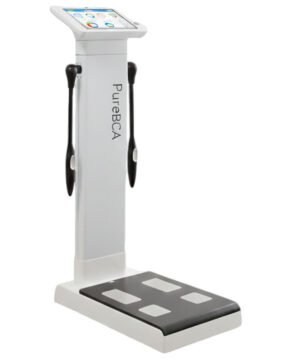
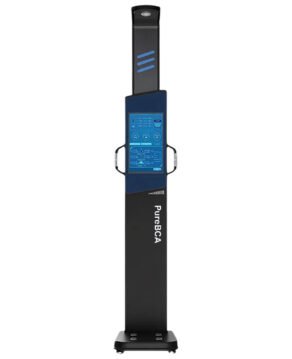
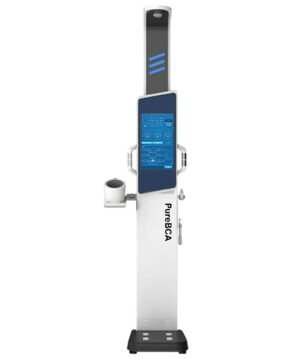
PureBCA 820H
Original price was: ₹686,000.₹343,000Current price is: ₹343,000. -
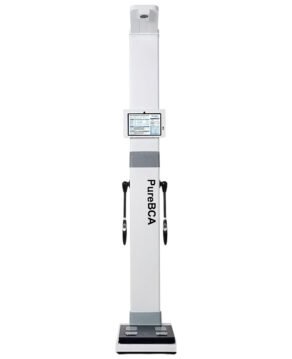
PureBCA 900
Original price was: ₹869,000.₹434,500Current price is: ₹434,500. -
PureBCA 970 Pro
Original price was: ₹1,100,000.₹550,000Current price is: ₹550,000.
End of content
End of content
A device that measures the proportions of fat, muscle, bone, and water in the human body.
A scale only measures total weight; a BCA breaks that weight down into specific tissue types.
Bioelectrical Impedance Analysis-it sends a low-level electrical current through the body to measure resistance.
Home scales use 2 electrodes (legs only); pro units use 8 electrodes (full body).
Between 15 and 60 seconds.
At least 45 minutes to an hour.
No. It is best to test after fasting for 3-4 hours.
Every 4-8 weeks to track meaningful changes in muscle and fat.
While not harmful, results are inaccurate due to increased body fluids and the fetus.
Yes, but specific algorithms are needed for growing bodies.
Individuals with pacemakers or other implanted electronic medical devices.
Temporary inflammation and water shifts can cause "phantom" fat increases.
Yes, it is imperceptible and safe for most people.
The total mass of fat divided by total body mass.
Everything in your body (muscles, organs, bones, water) except for fat.
The muscles attached to bones that can be developed through exercise.
The minimum number of calories your body needs to function at rest.
The total amount of fluid in the body, divided into intracellular and extracellular water.
A simple ratio of weight to height (less accurate than body composition).
It doesn't distinguish between muscle and fat; an athlete may have a "high" BMI but low body fat.
The dangerous fat stored around internal organs in the abdominal cavity.
The fat located directly under the skin.
The measurement of muscle distribution across five body parts (arms, legs, and trunk).
Having a normal weight but high body fat and low muscle mass.
Hydration levels, recent food intake, exercise, and skin temperature.
Muscle is high in water; if you are dehydrated, the machine may underestimate muscle mass.
No. Exercise changes blood flow and hydration, which can skew results.
To minimize variables like food and fluid fluctuations.
Yes, a full bladder can be misidentified as lean mass.
Yes. Electrodes need direct skin contact with the feet.
It is recommended to remove heavy metal jewelry to avoid interference.
No, due to significant changes in water retention.
Yes, extremely cold or hot skin can alter impedance.
Minor illnesses usually don't affect results, but fever-related dehydration will.
Yes, by analyzing Total Body Water (TBW) ratios.
It estimates bone mineral content, but it is not a replacement for a Bone Density (DEXA) scan.
Yes, by measuring the ratio of Extracellular Water (ECW) to Total Body Water (TBW).
Fluid retention that shows up as an abnormal ECW/TBW ratio.
Yes, by monitoring visceral fat and muscle mass, which impact insulin sensitivity.
It tracks the loss of muscle mass associated with aging.
Generally yes, but they may slightly alter segmental results in that specific limb.
High visceral fat levels are a primary indicator of cardiovascular risk.
Some people have "healthy" weights but metabolic profiles of obesity; BCA identifies this.
Some advanced units measure "Phase Angle," an indicator of cellular integrity.
A measurement of how cells respond to the electrical current; higher is generally better.
Yes, by comparing muscle mass in an injured limb vs. a healthy limb.
Yes, through tracking lean mass and Phase Angle trends.
High frequencies pass through cell membranes; low frequencies flow around them.
Using multiple electrical frequencies to get a more detailed look at intracellular water.
A system using two electrodes for each hand and foot for higher precision.
Most commercial units support up to 250kg-300kg.
Most modern units self-calibrate, but professional servicing is recommended annually.
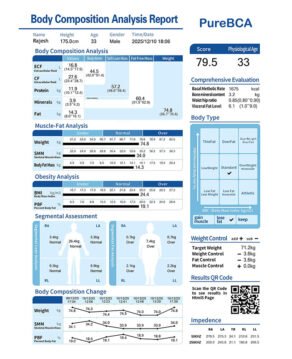
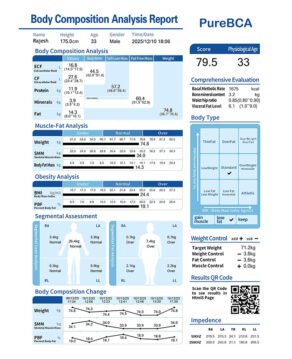
A comprehensive printout that explains all the metrics to the user.
Many units have built-in screens, but PC software allows for better data tracking.
Some models are foldable or come with carrying cases for mobile clinics.
Life-Time with proper care.
No, most run on standard 110v/220v outlets.
It increases member retention by showing tangible progress beyond the scale.
Yes, many gyms charge $20-$50 per scan or include them in premium memberships.
It allows them to prove that their programming is working (increasing muscle while losing fat).
Essential. It shows if a client is losing fat or accidentally losing muscle.
Yes, it's the only fair way to judge a winner (based on fat loss, not weight loss).
Yes, by showing a need for protein (low muscle) or hydration products.
It provides easy, non-invasive health screenings for employees.
Most units pay for themselves in 6-12 months through scan fees and increased retention.
Yes, serious athletes and biohackers look for facilities with professional tech.
Typically 10-20%.
Typically 18-28%.
The minimum fat needed for hormonal and reproductive health (higher in women).
When muscle mass is higher than weight and fat (ideal for athletes).
When muscle mass is lower than weight and fat (indicates a need for strength training).
When weight, muscle, and fat are in balanced proportion.
This is "Body Recomposition" you are losing fat and gaining muscle simultaneously.
An indicator of water balance; 0.380 is usually considered the healthy average.
A score above 10 usually indicates increased metabolic health risks.
It shows exactly where your body stores fat (e.g., more in the trunk vs. legs).
BCA often detects "handedness" or imbalances in training.
Yes, which is an indicator of muscle quality and hydration.
Many software programs use the data to estimate a biological age based on metabolic health.
A height-adjusted muscle mass metric used to screen for sarcopenia.
Low carb leads to glycogen depletion; since glycogen holds water, the machine may read this as "muscle loss."
BCA is faster, less invasive, and doesn't suffer from "human error" in pinching.
BCA is dry and much faster, though hydrostatic is slightly more accurate for specific athletes.
BCA is significantly more affordable and takes up less space.
DEXA is the "Gold Standard" but involves X-ray radiation and high costs; BCA is a safe, daily-use alternative.
They are good for tracking trends, but not for absolute clinical accuracy.
3D body scanning combined with BIA for a visual and data-driven 360-degree view.
For non-invasive monitoring of fluid in heart failure and renal patients.
Yes, almost every NFL, NBA, and Premier League team uses professional BIA.
PureBCA, InBody, Tanita are the industry leaders.
Most modern units use Wi-Fi or Bluetooth for data syncing.
No, it must be on a hard, level surface for the weight sensors to be accurate.
No, skin-to-electrode contact is required.
It is considered significantly superior to tracking "weight" alone.